
01
Prepare the feed
Remove ferrous metal first, then spread the remaining feed evenly across the conveyor.
EDDY CURRENT SEPARATOR
MagThro uses a rotating magnetic field to repel conductive non-ferrous metals away from the remaining material. Here is how that principle becomes part of a working recycling process.
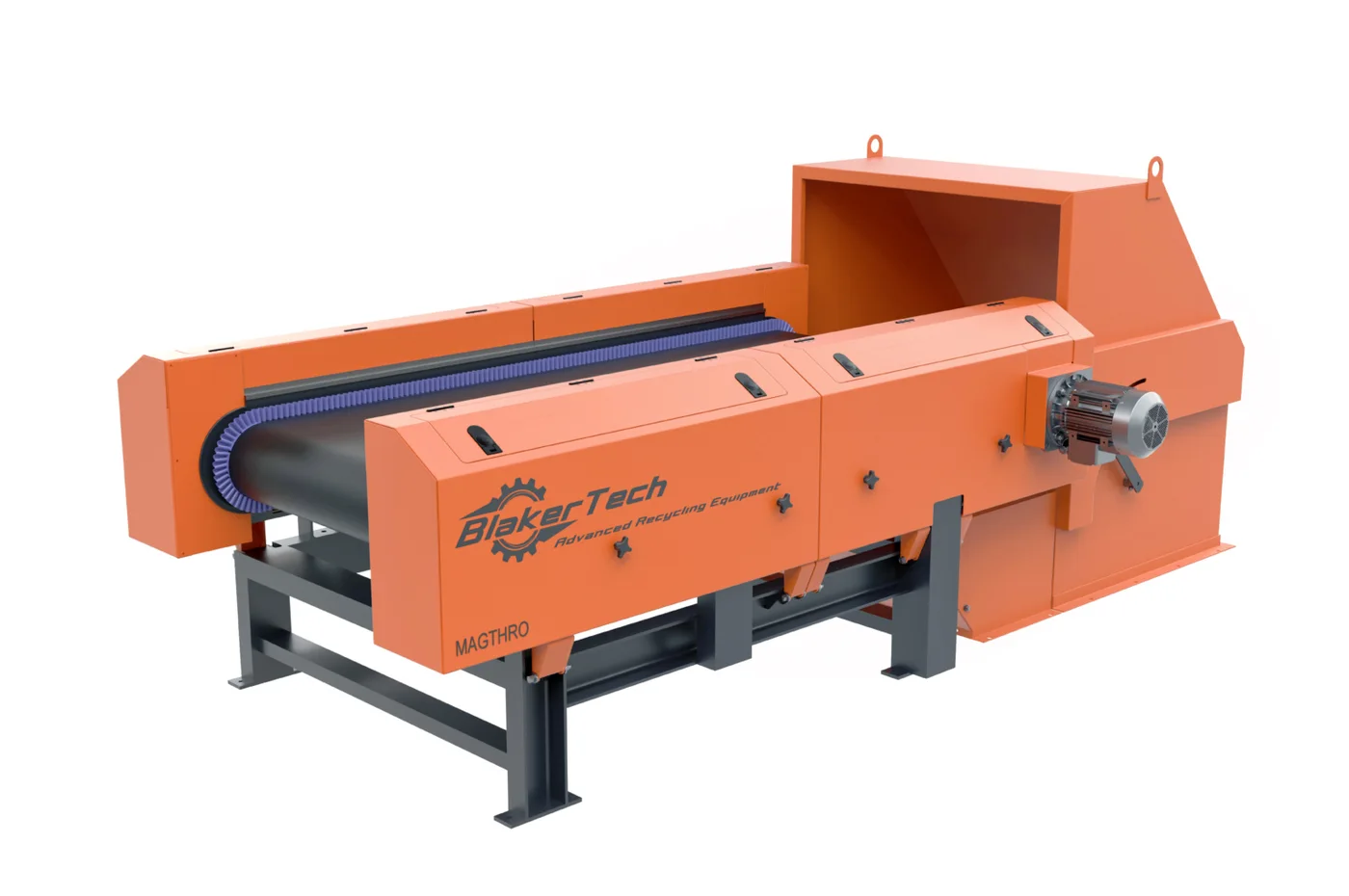
THE SEPARATION PRINCIPLE
Inside an eddy current separator, a rotating magnetic field induces electrical currents in conductive material. The resulting interaction produces a repelling force, changing the path of a non-ferrous metal particle as it leaves the conveyor.
Other material follows a different trajectory. Positioning a splitter between the paths allows the output to be collected in separate fractions.
This is different from using a conventional magnet to collect ferrous metals. Ferrous removal belongs upstream in the preparation of the feed.
FOLLOW THE MATERIAL
What happens before and after the separator helps determine the value of its output.
Remove ferrous metal first, then spread the remaining feed evenly across the conveyor.
A high-speed neodymium rotor induces eddy currents that repel non-ferrous metals.
A splitter directs waste, smaller non-ferrous pieces and larger metals into separate streams.
FROM PRINCIPLE TO PERFORMANCE
A separation principle explains how the machine works. A trial explains how your material behaves. Establish the range of conditions the system needs to handle before selecting a configuration.
A sample dominated by one size may not represent a feed containing a broad mixture. Share the size distribution, screening method and likely variation so the test can address the material actually reaching the separator.
Describe what is in the feed, including material you do not want. Bonded components, coatings and residual contamination can change the task. Clarify which upstream steps are responsible for preparing it.
Consider the way material arrives, not only the average tonnes per hour. Discuss batch delivery, surges and the feeding equipment alongside the separator itself.
Explore application planning ↗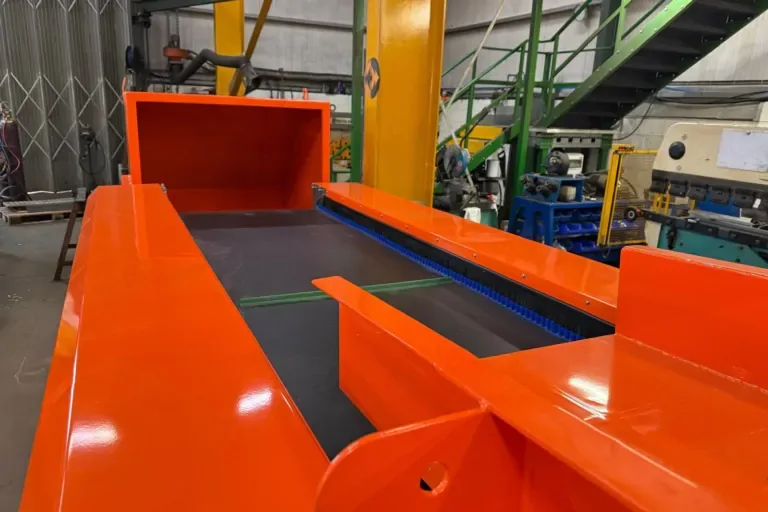
THE MAGTHRO SYSTEM
Belt width and splitter configuration are agreed for your application. Request a confirmed specification.
For a purchase specification, ask BlakerTech to confirm the arrangement, dimensions, utilities, access requirements and agreed scope in writing.
ASSESS THE WHOLE OUTPUT
Recovery asks how much of the target material reaches the desired output. Purity asks how much of that output is the material you want. Neither number tells the whole story alone.
Discuss both with the team. Examine the recovered product and what remains in the other fractions, then relate the findings to your downstream process.
Trial observations apply to the material and settings used in that trial. Use them to define the next engineering step, rather than assuming a single result describes every future feed.
Plan a material trialTECHNOLOGY QUESTIONS
Conductive non-ferrous metals, including aluminium, copper and brass.
An even feed helps separation. Discuss size distribution, moisture and contamination with the team before specifying equipment.
Yes. Ask BlakerTech to confirm the rotor, belt and splitter arrangement for your material.
Bring details of your feed, current process and desired output. A sample test can help establish the next step.